Install Deb Package On Opensuse
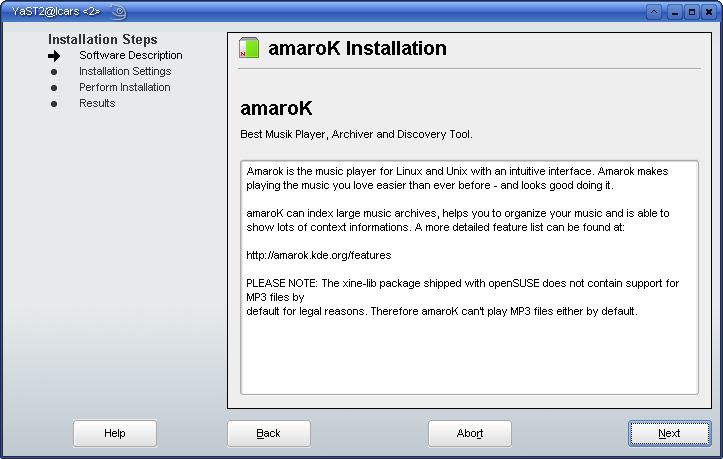
Most of the desktop Linux users stay in 3 categories: Debian/Ubuntu, Fedora, Arch Linux. But today, I’ll give you 5 reasons why you should use openSUSE. I’ve always found openSUSE to be a bit different kind of a Linux distro. I don’t know, but it’s just so shiny and charismatic. The green chameleon looks awesome. # aptitude update && aptitude install packagename Debian and derivatives # yum update && yum install packagename CentOS # zypper refresh && zypper install packagename openSUSE 3. Removing a package. The option remove will uninstall the package but leaving configuration files intact, whereas purge will erase every trace of the program.
Every Linux distribution based on Debian uses Debian packages as a method for installing and uninstalling the software. Debian packages are identified by the file extension .deb. They can be installed and uninstalled using graphical tools and the command line.
Why Install a .deb File Manually
Most of the time you use a package manager such as the Ubuntu Software Center, Synaptic, or Muon to install the software in Debian-based distributions. If you prefer to use the command line, you are likely to use apt-get.
Some applications aren't available in the repositories and have to be downloaded from the vendors' websites. Be careful about downloading and installing Debian packages from sources that do not exist in the distribution's repositories.
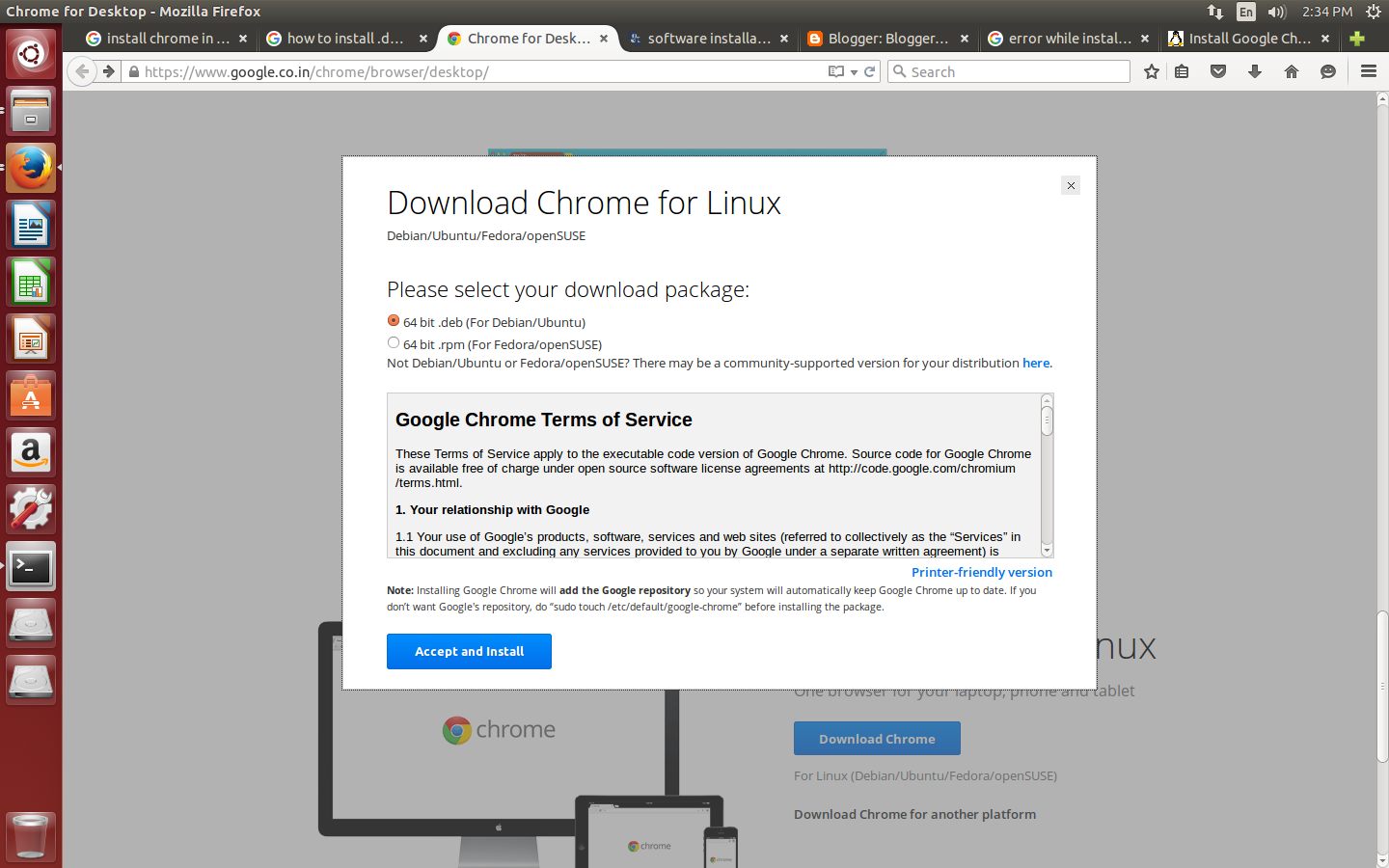
Some of the biggest applications are delivered in this format, including Google's Chrome web browser. For this reason, it is important to know how to install the packages manually.
Where to Get a .deb File
For demonstration purposes, you need a .deb file to install.
This example uses the .deb file for a QR Code Creator. A QR code is one of those funny-looking symbols you see just about everywhere. When you focus on the QR Code with your mobile device, it takes you to a web page, almost like a hyperlink.
On the QR Code Creator page, there is a .deb file. Clicking on the link downloads the .deb file to your downloads folder.
How to Install .deb Packages
The tool used to install and uninstall Debian packages is called 'dpkg.' It is a command line tool. Through the use of switches, you can do many different things with it.
The first thing you want to do is install the package. Type the following into the command line:
For example to install the QR Code Creator the command is as follows:
If you prefer, you can also use --install instead of -i as follows:
What Happens If It Breaks?
When you install a any type of package on a Linux system, there's a good chance that it's going to depend on other packages, often called dependencies. Dpkg doesn't have automatic dependency resolution, meaning that it won't pull the packages that your package requires. Often times, this leads to errors when installing a .deb package with dpkg.
There's a simple solution. After your install fails, run the following command to use the Apt package manager, which does have dependency resolution, to sort out the mess and fix anything that's broken.
You can shorten that to:
Apt will clean up what dpkg broke, and install both your package and its dependencies.
Installing With Apt
You do have another option when it comes to installing .deb packages on your system. The Apt package manager, the same one you use to update your system and install new packages from the Web, can also install packages locally on your system.
As previously discussed, Apt has the advantage of automatic dependency resolution, so you won't need to worry about things ever breaking in the first place. Apt will handle both your package and anything that it may need.
Opensuse Package Manager
To use Apt, simply point it in the direction of whichever .deb package you want to install.
If you want to play it extra safe, you can add the 'fix broken' flag from before to ensure that Apt gets everything.
What Is in a .deb File?
If you have ever wondered what makes up a .deb package, you can run the following command to extract the files from a package without installing it.
This command extracts the contents of the qr-code-creator package into a folder called qrcodecreator located in the home folder (/home/qrcodecreator). The destination folder qrcodecreator must already exist.
In the case of qr code creator, the contents are as follows:

- usr
- usr -> bin
- usr -> bin -> qr-code-creator
- usr -> share
- usr -> share -> applications
- usr -> share -> applications -> qr-code-creator.desktop
- usr -> share -> doc
- usr -> share -> doc -> qr-code-creator
- usr -> share -> doc -> qr-code-creator -> changelog.gz
- usr -> share -> doc -> qr-code-creator -> copyright
- usr -> share -> man
- usr -> share -> man -> man1
- usr -> share -> man -> man1 -> qr-code-creator.1.gz
- usr -> share -> pixmaps
- usr -> share -> pixmaps -> qr-code-creator.png
- usr -> share -> qr-code-creator
Removing .deb Packages
Remove a Debian package using the following command:
If you want to remove the configuration files as well, use the following command:
Apt can handle these too, and you won't need to remember the whole version number, just the actual name of the package.
If you are using a Ubuntu-based distribution, just double-click on the .deb file, and it loads into the Software Center. Then, click install.
Kodi, formerly known as XBMC, is very polished, powerful and versatile open source application which offers all sort of options to make a PC an amazing Home Theater PC in conjunction with Big Screen TV and Hi-Fi audio system.
It provides a fluid user interface with lots of add-ons that are used to extend the capability and functionality in a wide range of variety. It can play all the collection of music files, including MP3, FLAC, WAV, WMA or OGG. You can also play your all the video collection by Kodi, including AVI, MP4, DivX, XviD, DVD-Video, MKV, and much more.
SEE MORE – Best and Useful Ubuntu Software That Will Make You More Productive
How to install Kodi on Ubuntu and Ubuntu based distros
Run the following command to install audio codecs and other Add-ons
Update any addons like PVR clients
Upgrading the Kodi Package
If anyone wants to downgrade the Kodi to the stock version, just the purge the nightly ppa.
Install ppa-purge and purge ppa via
Uninstall the Kodi
Remove the settings folder to remove all settings and library data
The installation instructions should work on Ubuntu, Linux Mint, Elementary OS and other Ubuntu derivative systems.
How to install Kodi on Debian 8
Edit “/etc/apt/sources.list” file to Enable Jessie backports repository.
Add this line at the end of the file.
Save and close the file. Then update local package index and install Kodi
Run the following command to start Kodi
How to install Kodi on Arch Linux
Kodi is available in the Arch Linux community repository, so you can easily install Kodi using Pacman
How to install Kodi on OpenSUSE Leap 42.1
Kodi is also available in the Packman repository, so first, enable packman on OpenSUSE Leap 42.1 with the following command:
Then install Kodi with zypper
One Last Thing…
SEE MORE – All in One Best Ubuntu Themes that will Blow Your Mind
Mind if you do me a sweet favor, and tap the Social Share Button if you learned something new? It’d mean so much to me.
Thanks again for spending part of your day here. Hope to see you come back. 🙂